Is this money even real?
Yes. And almost nobody near me is asking for it.
paid out by Climate Resilient Farming since it began — across 700+ farms.
farms funded in the Finger Lakes vs. all of Western NY, latest round. Same program. Not farm quality — habit.
water infrastructure on our own 22-acre farm — the grant this whole page is built from.
Where the money is
Five programs that fund tree farms
Not fifty. Five — the ones I've used, applied to, or learned from the people who run them. Match the program to your problem, never the other way around.
Equipment & infrastructure in your first ten years of farming. Start: apply directly to NYFVI.
Water, drainage, soil & greenhouse-gas-reduction work. Start: your county Soil & Water district sponsors and submits it — you bring the narrative.
Cost-share on conservation practices. Pairs well with IPM work. Start: find your local USDA Service Center.
A free farm walk-through that unlocks half of the programs above. Start here if you start anywhere — call your county Soil & Water district.
Loans and energy cost-share to catch what grants won't cover. Start: Farm Service Agency / USDA Rural Development.
Don't shop for grants — shop for solutions
Match the problem to the program
What a funded application does on the page
The four rules
2.02M gallons stored · 24.2 mt CO₂e/yr (calculated in COMET-Planner — the state's own tool — and cited) · 5–7K trees saved over five years · 1,440 gallons of diesel avoided. Vague is a choice; make the other one.
Hunt for points before writing a word. 5 points for the beginning-farmer checkbox · 30 points for the project description · pick your track deliberately, then write in its vocabulary.
Innovation (a replicable model under $5K) · climate outcomes (24.2 mt CO₂e) · a viable business (labor & survival rates). Same truth — translated, never changed.
Reuse the farm narrative, the numbers library, the photo archive, the budget format. Application #1 is tuition; by #4 you're mostly assembling, not writing.
Use the machine to challenge you, not write for you
Three AI prompts that did real work
Paste your own rubric and narrative where the [brackets] are. AI slop won't win a grant — but a good reviewer simulation will sharpen yours.
“You are a grant reviewer scoring my application against the official rubric. Rubric: [PASTE]. My narrative: [PASTE]. Score every section line by line, out of its maximum. For each section that loses points, name the exact sentence or missing evidence that cost me. Then list my three weakest claims. Do not rewrite — score and diagnose.”
“Argue against funding my application. Be specific and unsentimental — assume the budget is tight and you want reasons to cut me. My narrative: [PASTE]. Give your strongest case for rejection: every weak number, unsupported claim, and vague phrase. Rank the objections from most to least damaging.”
“List every sentence in the text below that contains no checkable fact, number, date, or specific record — sentences that could describe any farm. List them verbatim, one per line. Do NOT rewrite them. Text: [PASTE].”
The off-season playbook
Three calls and a calendar
Free. Someone walks your farm, and that document is the on-ramp to CRF, EQIP — everything. The highest-leverage call in agriculture.
+ Add reminder to calendarOne question: “What's opening this fall?” They know before the websites do.
What opens when — and which quotes, photos, and letters to gather in the quiet months.
+ Add reminder to calendarOptional — only if it's useful to you
Notes from the farm, about once a week
Real numbers, real mistakes, what's working in the field and what very much is not — including the grant rounds as they open. No pitch. Unsubscribe anytime.
Who's behind this
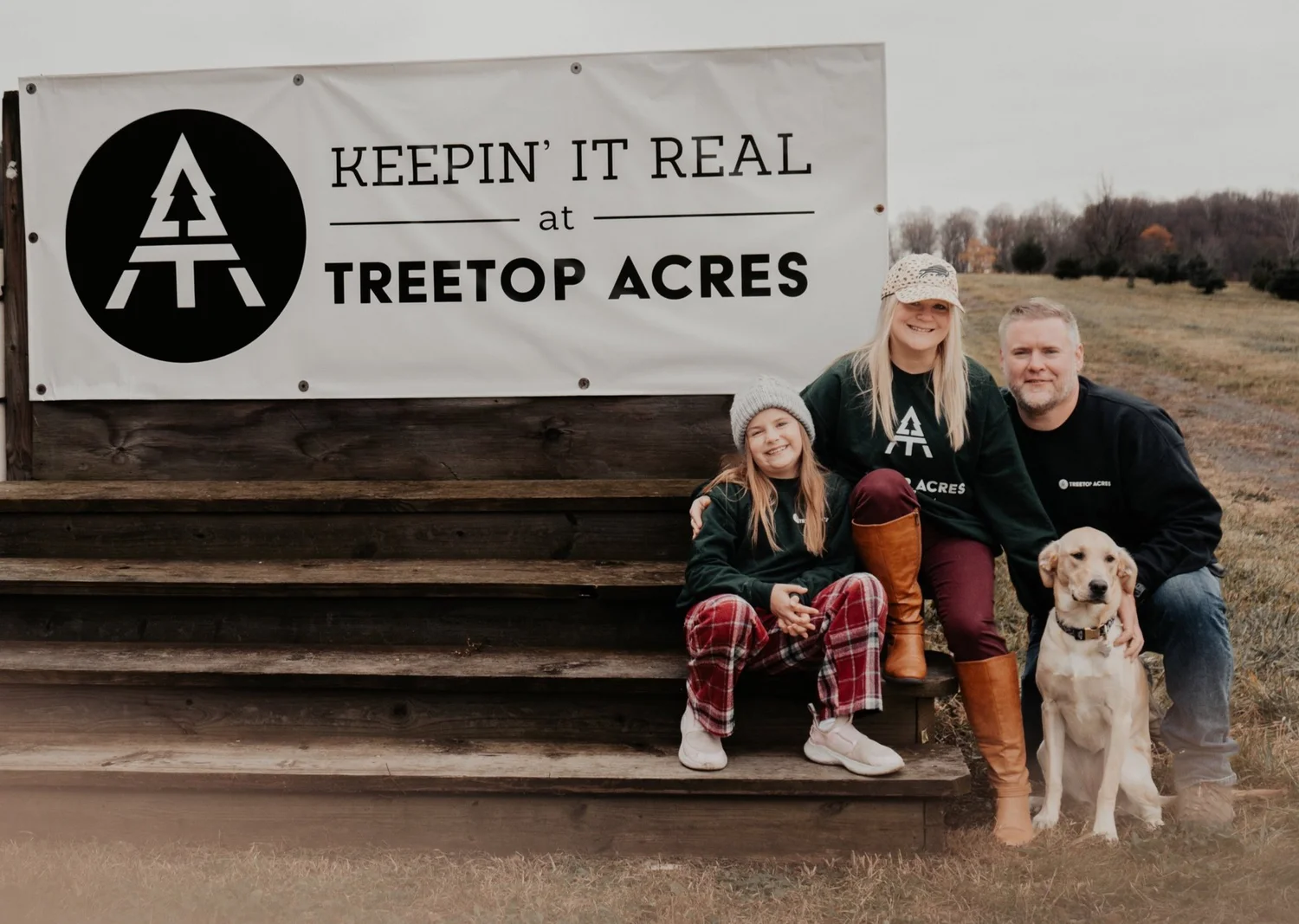
I'm Patrick — a first-generation tree farmer in Lockport.
I bought Treetop Acres with zero farming background and a day job in cybersecurity. I learned grant writing the way I learned everything else here — by doing it badly, then a little better. This page is the version of that I wish someone had handed me.
If you ever want a second set of eyes on a live application, that's something I help with one-on-one through Dirt to Dividends — but everything on this page is yours free, no strings. Reach me anytime at pat@visittreetopacres.com.
